Sportfishing in Maui: How to Choose Your Trip and What to Expect
In short
Sportfishing in Maui usually means a guided offshore boat trip built around either trolling for open-ocean fish, bottom fishing for deep-water species, or a mix of both. Choose the trip by the kind of fishing you want, how much time you have, your group's comfort on the water, and the operator's plan for the day rather than by a promise of a particular catch.
Table of contents
- What does sportfishing in Maui actually mean?
- Should you book trolling, bottom fishing, or a combination trip?
- Which Maui sportfishing trip length makes sense?
- Should you choose a private or shared fishing charter?
- What fish might you target offshore Maui?
- What rules do visitors need to know before fishing in Maui?
- How much do conditions matter on a Maui fishing trip?
- What should you confirm before booking?
- Frequently asked questions about sportfishing in Maui
What does sportfishing in Maui actually mean?
Sportfishing in Maui generally means fishing from a boat with a captain and crew, usually outside the reef in open water or over deeper structure. It is different from casual shore fishing because the boat, route, bait, tackle, and target species shape the experience as much as the angler does.
Maui visitors often use several terms interchangeably: sportfishing, deep-sea fishing, offshore fishing, and charter fishing. They overlap, but they do not always describe the same trip. A trolling-focused outing may spend most of the day moving through open water with lines behind the boat. A bottom-fishing outing may stop over depth and fish vertically. A private charter may do either one, depending on conditions and the captain's plan.
That distinction matters when comparing listings. A photo of a large marlin does not tell you whether the actual trip is mostly trolling, whether bottom fishing is offered, how long the boat will run before lines go in, or whether your party has the boat to itself.
Maui's main visitor departure areas can include Maʻalaea, Kīhei, Lahaina, and other harbors or landings depending on the operator and current harbor access. Confirm the exact departure point before reserving, especially if you are staying in Wailea, Kīhei, Kā‘anapali, or elsewhere on the island.
A guided fishing charter and a self-drive rental are also not interchangeable. A charter supplies the captain's fishing plan and local operating knowledge. A self-drive boat is only appropriate for qualified operators who are prepared to make their own navigation, weather, safety, and fishing decisions. Review practical boat safety guidance before taking responsibility for a vessel yourself.
Should you book trolling, bottom fishing, or a combination trip?
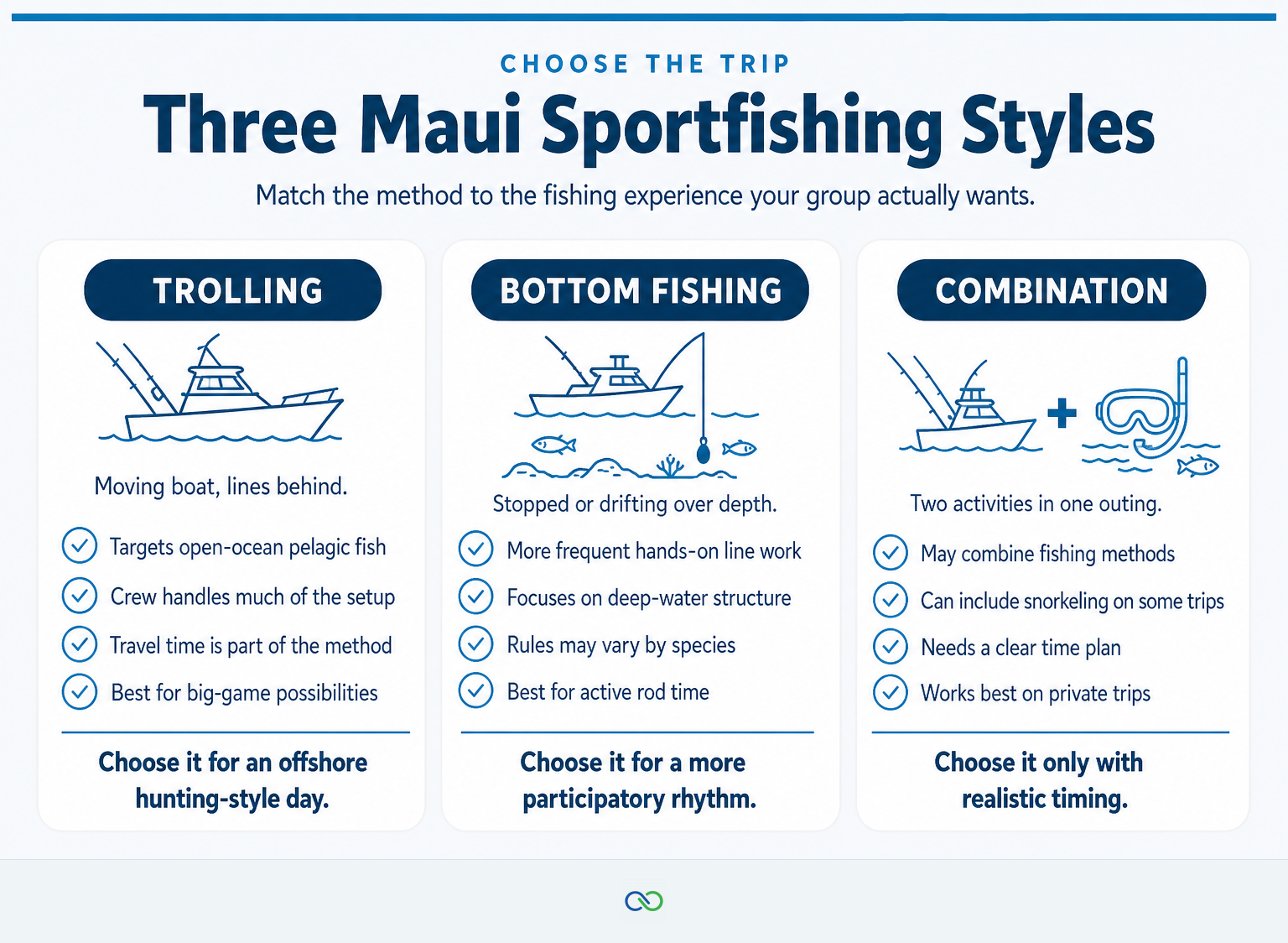
Book trolling if your group is excited by the possibility of pelagic fish and does not mind covering water between bites. Book bottom fishing if you would rather spend more time actively dropping lines over deep structure; choose a combination trip only after the operator explains how the day will be divided.
Trolling and bottom fishing ask different things of the boat, crew, and anglers. Neither is automatically better. The right choice is the one that matches what your group will enjoy even if the fishing is slow.
Trolling for offshore pelagic fish
Trolling means the boat moves while multiple lines trail behind it. The crew may use lures, rigged baits, teasers, and outriggers while looking for offshore activity. It is the classic Maui big-game image: rods in holders, a sudden strike, and a fish making a fast run away from the stern.
A trolling trip is a reasonable fit when your group wants to target open-ocean species, values scenery and time underway, and is comfortable with periods without constant rod action. It can be a good choice for first-time visitors because the crew generally handles the technical setup until a fish is hooked.
The tradeoff is straightforward: moving between areas is part of the method. An active day may include multiple strikes, while another day may be quieter. A responsible operator will not promise a marlin, tuna, or mahi-mahi before the trip.
Bottom fishing over deeper water
Bottom fishing usually involves stopping or drifting over deeper structure and lowering baited rigs toward the bottom. It can feel more hands-on because anglers may be dropping, retrieving, and resetting lines more frequently than on a trolling-only trip.
Hawaiʻi regulates several deep-water bottomfish species as the “Deep 7,” including onaga, ehu, kalekale, ʻōpakapaka, gindai, hāpuʻu, and lehi. State rules include a combined noncommercial daily limit of five Deep 7 fish and vessel-registration requirements for boats taking or possessing those fish. Ask the charter captain what bottom-fishing species and rules apply to the planned trip. Hawaiʻi DLNR's bottom-fishing guidance is the primary reference. (dlnr.hawaii.gov)
Bottom fishing is a better fit for anglers who want to hold the rod, feel bites, and focus on a more active fishing rhythm. It is not a guarantee of constant action, and depth, current, weather, and the captain's route still matter.
Combination trips
A combination trip can be appealing for families or mixed-experience groups, but the word “combination” needs a follow-up question: combination of what, exactly? It may mean trolling plus bottom fishing, fishing plus snorkeling, or a flexible private trip that changes plan according to conditions.
Ask how much fishing time is realistically available after travel time, safety briefing, setup, and any second activity. A shorter trip that tries to do too many things can leave everyone feeling rushed. If snorkeling is part of the plan, a monthly Maui ocean-temperature guide can help you pack for comfort in the water, but it should not be used to predict fishing success.
Which Maui sportfishing trip length makes sense?
A four-hour outing can work for a first taste of offshore fishing, while six to eight hours gives a captain more room to adjust to conditions and fishing activity. Longer is not automatically better, but a short trip should have a simple plan and realistic expectations.
Operators package time differently, so treat the following as planning bands instead of universal charter categories. Confirm whether the quoted duration begins at departure, includes check-in and return time, and leaves enough fishing time for the style you selected.
| Trip length | Often best for | What to ask before booking |
|---|---|---|
| About 4 hours | First-time anglers, young families, groups with a tight Maui itinerary | How far will the boat run, and is the trip focused on one fishing method? |
| About 6 hours | Visitors who want a fuller fishing day without committing to an all-day outing | Is the plan trolling, bottom fishing, or a flexible mix? |
| About 8 hours | Anglers who prioritize fishing time and are comfortable being offshore for most of the day | What happens if weather or sea conditions require a route change? |
| Custom private duration | Groups with specific goals, experienced anglers, or a fishing-plus-snorkeling plan | How will the captain prioritize the activities, and what is the backup plan? |
A longer charter gives the captain more flexibility, not a bigger promise. Time can help when the boat needs to change grounds or conditions shift, but fish are wild and no length of trip guarantees a particular species.
Before booking around a certain month, use Maui seasonal planning to think through your overall itinerary. Then ask the fishing operator what methods and targets make sense for your exact dates.
Should you choose a private or shared fishing charter?
Choose a private charter when your group wants control over the boat's pace, fishing style, and day plan. Choose a shared charter when keeping the per-person cost lower matters more than having a fully customized schedule.
A private trip usually gives one party the boat. That can make it easier to set a pace for children, first-time anglers, serious anglers, or a group that wants to combine fishing with another on-water activity. It also gives the captain a clearer picture of the group's priorities from the start.
A shared trip can be a sensible way to try offshore fishing without paying for the entire boat. The tradeoff is less flexibility. Your group may share rail space, rotating turns, target priorities, and departure decisions with people you do not know.
Ask these questions before comparing prices:
- Is the price for the boat or per person?
- What is the maximum number of anglers and passengers?
- Will every guest fish, or do some guests ride along only?
- Is the fishing plan private to your group or shared with other parties?
- Are gratuity, taxes, bait, tackle, licenses, and fish processing included or separate?
- What deposit, cancellation, weather, and rebooking terms apply?
The lowest initial price is not always the lowest total cost. Compare the same trip length, passenger count, inclusions, and cancellation rules before deciding which charter offers the better value.
What fish might you target offshore Maui?
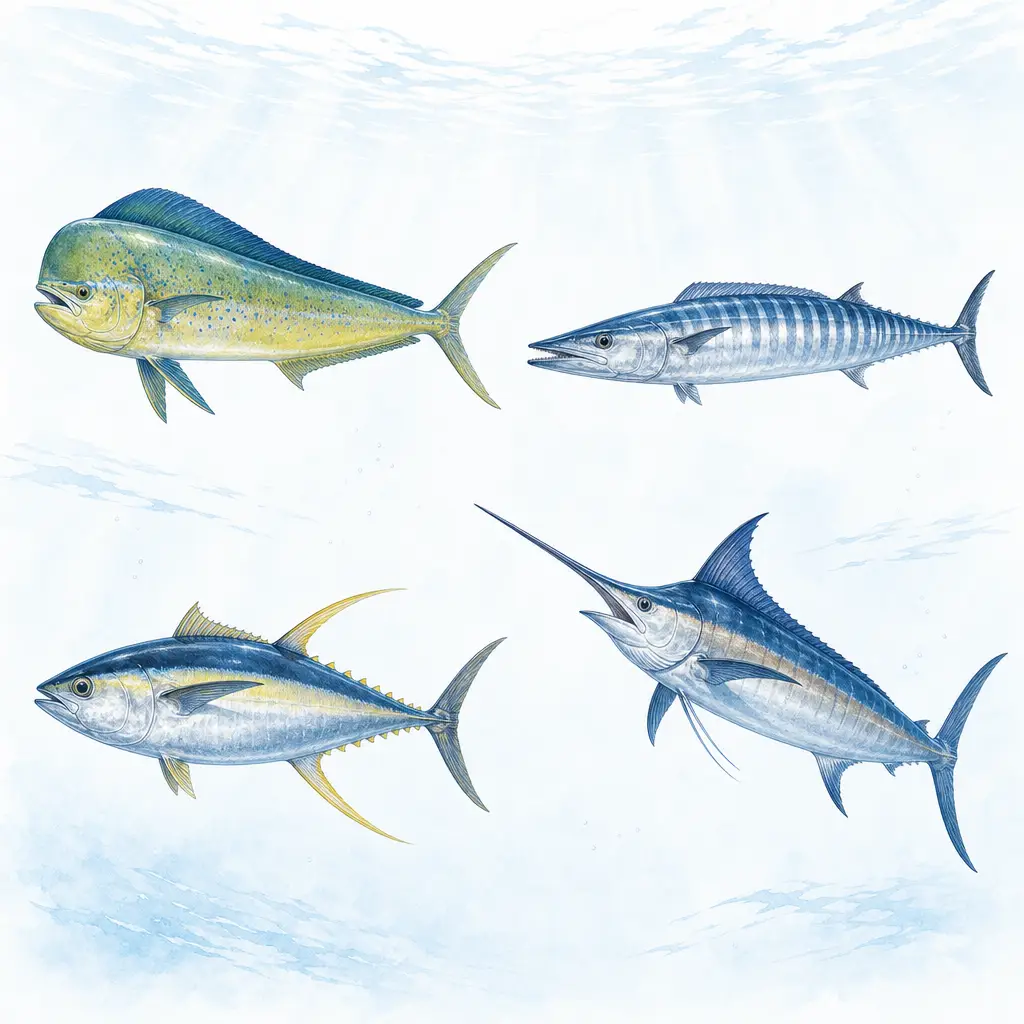
Maui offshore charters commonly talk about mahi-mahi, ono, ahi, and marlin because these are well-known pelagic targets in Hawaiian charter fishing. The species available on a specific day depend on season, water conditions, location, bait, and luck, so treat every target list as a possibility rather than a promise.
Here are the names visitors are most likely to hear:
- Mahi-mahi: Also called dolphinfish. It is a colorful, fast-moving pelagic fish and a familiar target on offshore trolling trips.
- Ono: The Hawaiian name for wahoo. NOAA notes that wahoo spawn year-round in tropical waters, including Hawaiʻi, but year-round presence does not mean the same catch odds every day. (fisheries.noaa.gov)
- Ahi: A Hawaiian term commonly used for tuna, including yellowfin tuna. Hawaiʻi fishing regulations list ahi among regulated marine fish, with a three-pound minimum size for sale. (dlnr.hawaii.gov)
- Marlin: Blue and striped marlin are the fish many visitors associate with big-game sportfishing. They are exciting targets, but booking a charter is not the same as booking a marlin.
- Deep-water bottomfish: Depending on the vessel, location, and legal requirements, anglers may fish for species such as ʻōpakapaka or onaga. These are managed differently from offshore pelagic fish and may be subject to closures or limits.
Fishing reports can be useful as recent context, but do not confuse a report with a forecast. The best question for a captain is not “Will we catch mahi-mahi?” It is “What type of fishing is most realistic for this date, trip length, and weather window?”
What rules do visitors need to know before fishing in Maui?
Most out-of-state visitors age 15 or older need a Hawaiʻi Nonresident Recreational Marine Fishing License to fish in the ocean, including from a charter boat. On October 28, 2026, Hawaiʻi DLNR lists the fees as $20 for one day, $40 for seven days, and $70 for an annual license; confirm the current requirement and price before departure because regulations can change. (dlnr.hawaii.gov)
This visitor license is separate from the operator's licensing and vessel obligations. Do not assume a charter reservation automatically covers the individual angler's license. Ask the operator whether guests need to buy it themselves, when to purchase it, and what proof to bring.
Hawaiʻi residents do not need a marine recreational fishing license, according to DLNR, but size limits, bag limits, seasons, gear restrictions, protected areas, and species-specific rules can still apply. DLNR says its online fishing-regulations booklet is current as of May 2025 and directs anglers to the official rules for the law in effect on the fishing date. (dlnr.hawaii.gov)
A few practical rules matter even on a guided trip:
- Do not take or handle protected wildlife. Hawaiʻi's marine rules list Hawaiian green sea turtles as having no open season, and federal protections also apply. (dlnr.hawaii.gov)
- Ask before keeping fish. The answer can depend on the species, trip, regulations, fish condition, and the operator's policy.
- Ask how the crew handles legal catch limits and fish that must be released.
- Do not plan an independent fishing stop inside a restricted area just because it looks accessible from the water.
If your day includes boating beyond a captained charter, review the site's frequently asked questions and confirm the applicable requirements before leaving shore.
How much do conditions matter on a Maui fishing trip?
Conditions matter enough that they should influence the trip plan, but not so much that a visitor should try to predict the exact catch weeks in advance. Wind, swell, current, rain, visibility, and the direction a captain can safely run may change the method or destination on the morning of the trip.
The National Weather Service's Honolulu office publishes separate marine forecasts for Maui County windward waters, leeward waters, Maʻalaea Bay, the Pailolo Channel, and the Alenuihāhā Channel. A Maui forecast should be read as marine information, not as a generic beach-weather report. (weather.gov)
Check Maui weather conditions before departure, then follow the charter captain's instructions. A captain may recommend changing the route, changing fishing methods, shortening the trip, postponing, or canceling when safety requires it. That is a sign of responsible operation, not a failed outing.
Seasickness planning also belongs in the booking conversation. Ask whether the ride is typically exposed, whether there is shade and seating, whether food and drinks are allowed, and whether the operator has guidance for guests prone to motion sickness. Talk with a qualified medical professional before taking medication if you have questions about suitability or interactions.
What should you confirm before booking?
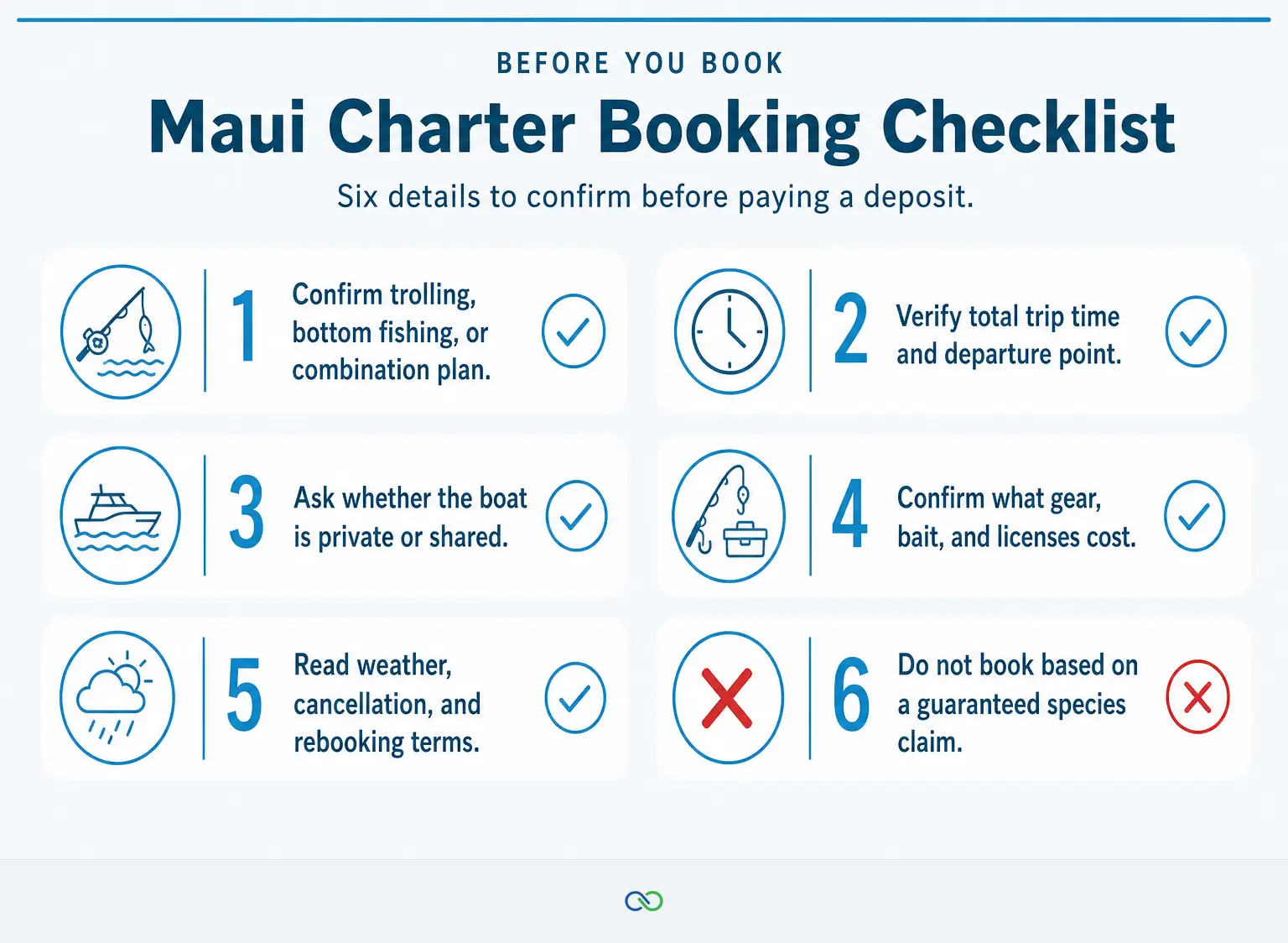
Confirm the trip type, total cost, departure point, license process, cancellation policy, and realistic fishing plan before paying a deposit. A clear answer to those six items will tell you more than a generic “best Maui fishing charter” list.
The following checklist helps separate a trip that fits your group from one that only looks good in photos.
- Fishing method: Ask whether the day is trolling, bottom fishing, or a true combination trip.
- Time on the water: Confirm the length of the trip and whether check-in, travel, and return time are part of it.
- Group setup: Confirm whether the booking is private or shared, who gets to fish, and how many people will be aboard.
- Gear and fish policy: Ask what tackle, bait, licenses, and fish handling are included and what is extra.
- Safety and weather terms: Read the cancellation policy and ask how the operator handles route changes or rough conditions.
- Departure logistics: Verify the exact harbor or landing, parking instructions, arrival time, and what to bring.
NOAA Fisheries advises visitors to make sure a charter is responsible and licensed before booking. That simple check is worth making before comparing social-media photos or deciding based on one old review. (fisheries.noaa.gov)
For help comparing a guided fishing trip with a private boat option, use the Maui Boat Rentals contact page to ask about current availability, operator requirements, and the experience that best fits your group.
Frequently asked questions about sportfishing in Maui
Can tourists fish in Maui?
Yes, tourists can fish in Maui, but nonresidents age 15 and older generally need a Hawaiʻi Nonresident Recreational Marine Fishing License for recreational ocean fishing, including on charter boats. On October 28, 2026, DLNR lists one-day, seven-day, and annual options. Confirm current requirements before the trip. (dlnr.hawaii.gov)
What fish are biting off shore?
What is biting offshore Maui changes from day to day with water conditions, bait, location, and fishing pressure. Charter conversations commonly include mahi-mahi, ono, ahi, marlin, and bottomfish, but only a current captain's report can describe recent activity. No responsible operator can guarantee a particular species.
Is May a good month to go to Maui?
May can be a good month for a Maui sportfishing trip because offshore charters operate throughout the year, but it is not a guarantee of calm water or a certain catch. Choose the trip around your schedule, then check the marine forecast and ask the operator what fishing method is realistic for your date.
What is the best month to fish in Hawaii?
There is no single best month to fish in Hawaiʻi for every angler because target species, island, fishing method, and weather all vary. For Maui, choose dates that work for your vacation, then ask a charter captain what targets and conditions are typical for that period instead of booking around a guaranteed species.
A good Maui sportfishing trip starts with a simple decision: pick the fishing method and trip length your group will enjoy even if the day is quiet. Then verify the rules, read the weather terms, and let a qualified captain make the final call on the water.