Deep-Sea Fishing in Maui: Costs, Fish, Seasons, and Charter Tips
In short
Maui deep-sea fishing is usually an offshore trolling charter, best booked for six or eight hours if catching a pelagic fish matters more than a quick boat ride. Compare private versus shared seats, check the nonresident fishing-license rule, and choose a boat that has a weather plan, clear catch policy, and realistic expectations.
Table of contents
- What kind of Maui fishing trip fits your group?
- How long should a Maui deep-sea trip be, and what will it cost?
- What can you catch, and when should you go?
- How do sea conditions change the plan?
- What should you confirm before booking?
- What else do visitors ask about Maui deep-sea fishing?
- Ready to choose a Maui fishing charter?
Maui offshore fishing is not one fixed experience. A six-person private trolling boat, a shared sportfishing seat, and a bottom-fishing trip can all appear in the same search results, but they set very different expectations for time, technique, comfort, and the type of fish you may target.
What kind of Maui fishing trip fits your group?
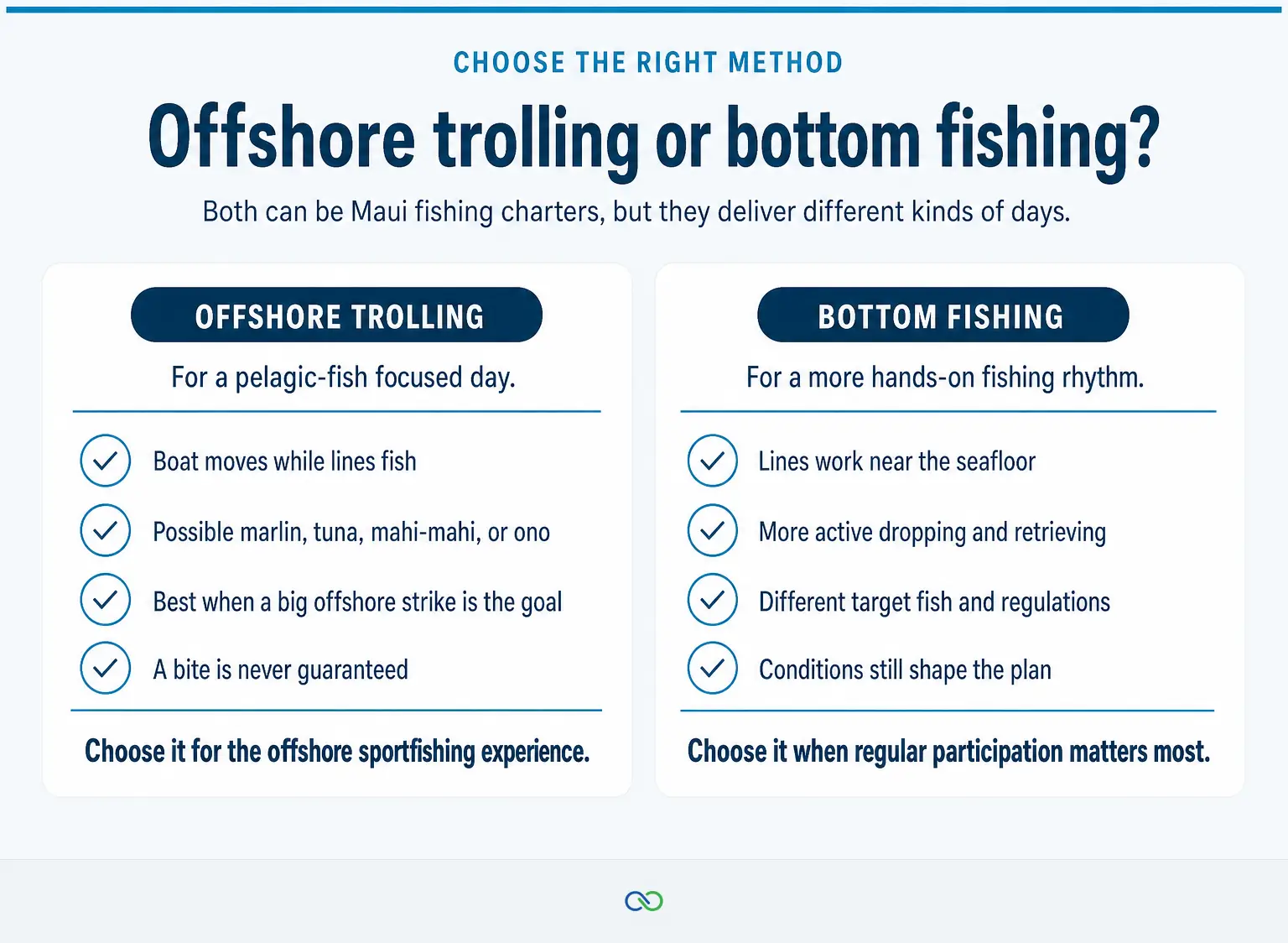
A Maui deep-sea trip generally means offshore trolling for fast-moving pelagic fish. Bottom fishing is different: the boat works fishing grounds closer to the seafloor, often with a more hands-on rhythm and a different set of possible catches.
For an offshore trip, choose trolling if the group is excited by the possibility of marlin, tuna, mahi-mahi, or ono and can accept that bites are never guaranteed. Choose bottom fishing when the group would rather spend more time actively dropping lines and reeling than waiting for a trolling strike.
Offshore trolling is often the better match for visitors who see fishing as the day’s main event. A mixed bottom-fishing trip can work well for families and first-timers who want regular participation, but conditions and the captain’s plan still decide what is practical that day.
If some people in the group are more interested in reef wildlife than offshore fishing, that is a different kind of ocean day. This Maui guide to reef fish you may see can help set expectations for a snorkeling-focused outing instead.
The right trip is the one that matches the group’s preferred fishing method, not simply the charter with the biggest fish in its photos.
How long should a Maui deep-sea trip be, and what will it cost?
For first-time visitors, six hours is often the practical middle ground: enough time for an offshore fishing day without committing the entire day to the boat. An eight-hour trip gives the captain more room to adapt to the bite and travel farther if conditions support it, but it costs more and asks more of guests who are prone to seasickness.
Published charter prices are not an islandwide average, and they can change. As examples checked in October 2026, Action Sportfishing listed private trips at $1,300 for four hours, $1,600 for six hours, and $1,900 for eight hours; Hinatea Sportfishing listed a six-hour private charter at $1,850 and an eight-hour private charter at $2,100 before its stated taxes and fees. (actionsportfishingmaui.com)
That range shows why a headline price is not enough. Ask if the rate is private or per person, how many guests can fish, whether taxes and gratuity are included, and whether the group must meet a minimum size for a shared departure. A one-day Hawaii marine fishing license may also be a separate $20 cost for nonresident anglers age 15 and older. (dar.hawaii.gov)
A four-hour trip can suit visitors who mainly want time on the water. A six- or eight-hour trip is the safer choice when the group’s priority is giving offshore trolling more time rather than trying to force results into a short window.
For a broader look at boat types, rates, and inclusions, compare this guide with fishing charters in Maui, Hawaii. Then ask the captain for the all-in total in writing before paying a deposit.
A longer charter buys time and flexibility, not a guaranteed catch.
What can you catch, and when should you go?
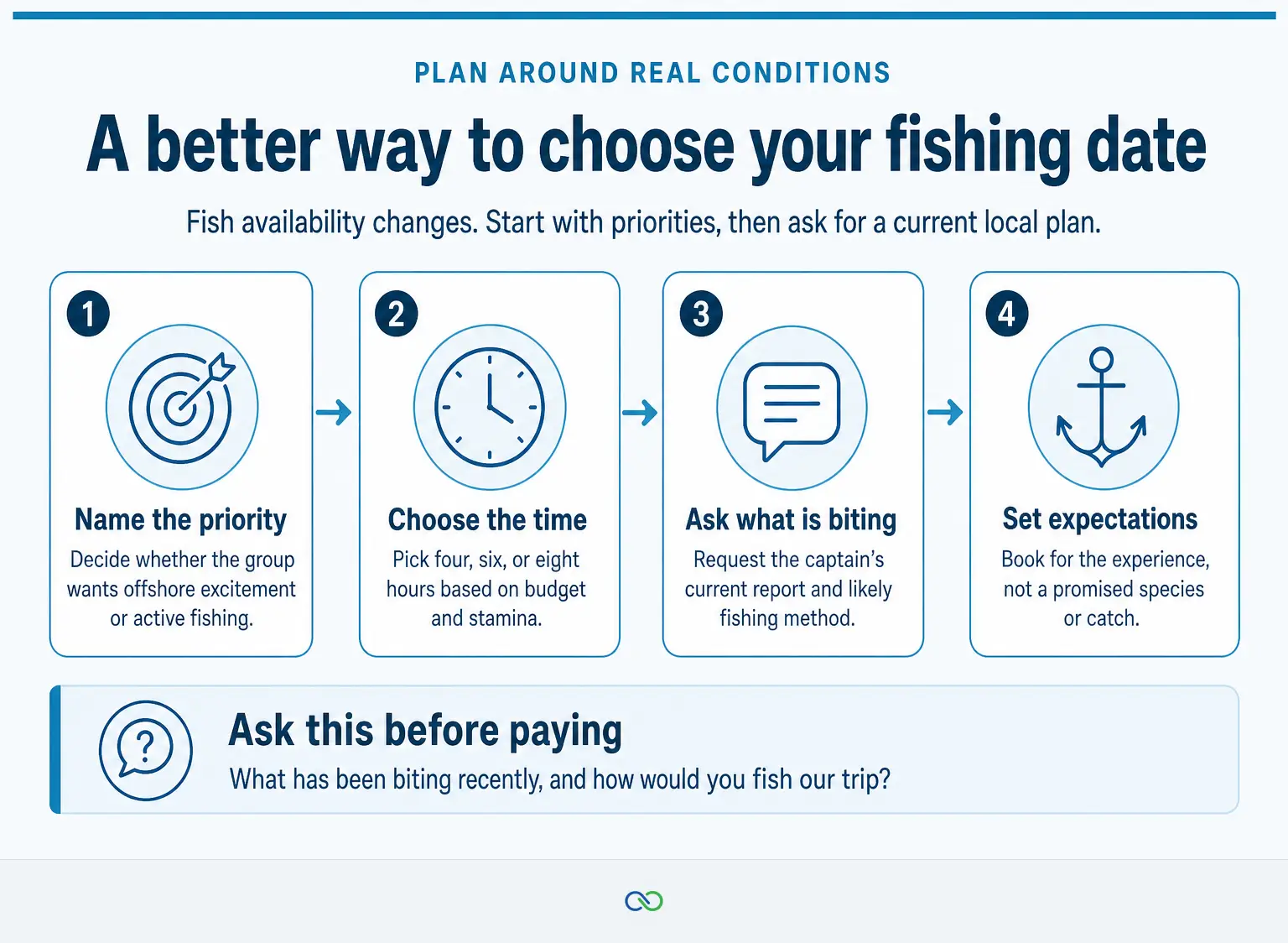
Maui offshore charter operators commonly list blue marlin, mahi-mahi, ono, and tuna among their target fish. The exact plan can change because weather, bait availability, fishing conditions, and the prior day’s bite all affect how a captain fishes. (hinateasportfishing.com)
A generic “best month” chart is less useful than a direct question to the captain: “What has been biting recently, and how are you planning to fish our trip?” That question gets you a current answer, while still leaving room for the ocean to do what it does.
Treat the target-fish list as a possibility list, not a menu. Ask what happens to the catch, too. Some operators may fillet a portion of legally retained fish, while other boats may have different handling policies and limits. The State of Hawaii’s fishing regulations remain the final reference for species rules and restrictions. (dlnr.hawaii.gov)
For more help connecting trip length, target fish, and charter style, see sportfishing in Maui, explained.
The best time to fish is the date that fits your vacation and a captain’s current local plan, not a calendar promise.
How do sea conditions change the plan?
Maui sea conditions can affect comfort, route choices, and whether a captain changes or cancels a trip. Check the marine forecast close to departure, not only the resort weather app, because offshore wind and seas can differ from conditions on shore.
The National Weather Service publishes separate marine zones for Maalaea Bay, Maui County leeward waters, Maui County windward waters, and nearby channels. Those zones are more useful for a fishing decision than a general island forecast. (weather.gov)
Ask the operator how weather calls are made, when a cancellation decision is normally communicated, and what happens to a deposit if conditions are unsafe or uncomfortable. Pack a hat, sun protection, water, a light layer, and any motion-sickness medication you have already confirmed is suitable for you.
Before leaving your hotel, review the latest Maui sea and weather conditions and read the captain’s arrival instructions. Arriving late can shorten an already limited fishing window.
The day’s forecast should shape the plan before the boat leaves the harbor.
What should you confirm before booking?
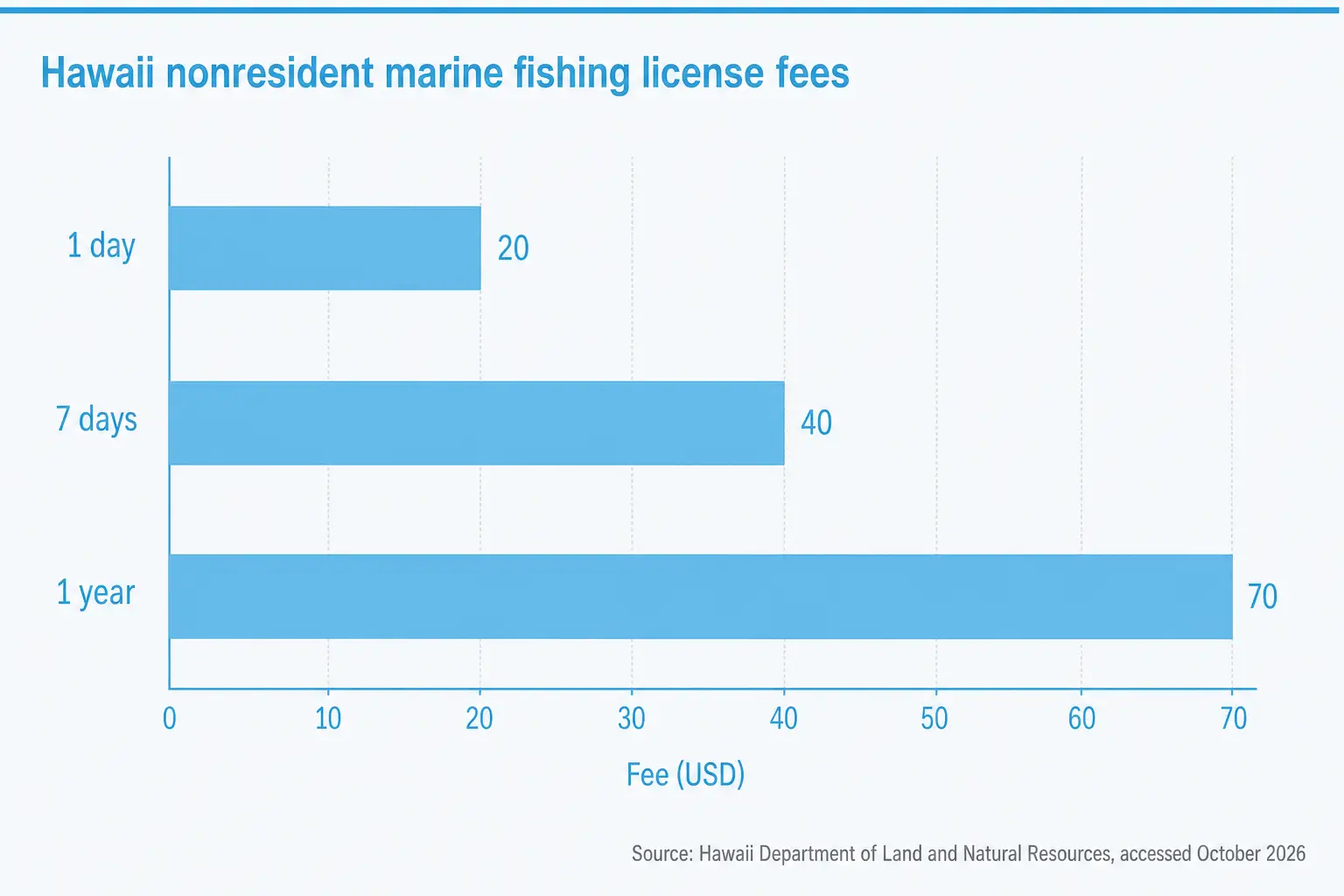
Confirm the fishing license, the total price, the departure point, the group size, the fishing method, and the cancellation policy before booking. For mainland visitors, the licensing question is especially important: Hawaii requires a Nonresident Recreational Marine Fishing License for nonresidents age 15 and older who fish in the ocean, including from charter boats. (dar.hawaii.gov)
The Hawaii Department of Land and Natural Resources lists the current nonresident fees as $20 for one day, $40 for seven days, and $70 for one year, plus any online processing fee. Active-duty military members and their minor children are exempt under the state’s published rules. (dar.hawaii.gov)
Use this quick booking checklist:
- Is the quoted rate private, shared, per person, or for the boat?
- Are taxes, gratuity, parking, bait, tackle, and the fishing license included?
- Is the outing primarily offshore trolling, bottom fishing, or a mix?
- Can everyone fish, and are there age or mobility limits?
- What fish may be retained, and how will any legal catch be handled?
- What is the weather cancellation and refund policy?
A charter crew runs the boat, but each visitor is still responsible for understanding applicable rules. Review the operator’s safety briefing and these boating safety basics before departure.
A clear written quote and a clear weather policy prevent most avoidable booking surprises.
What else do visitors ask about Maui deep-sea fishing?
How much is deep sea fishing in Maui?
Published Maui private-charter examples checked in October 2026 ranged from $1,300 for four hours to more than $2,000 for longer private trips before some stated taxes and fees. Shared seats can cost less per person, but guests should confirm minimum passenger requirements, gratuity, license costs, and exactly what the quoted rate includes. (actionsportfishingmaui.com)
Is deep-sea fishing in Maui worth it?
Maui deep-sea fishing is worth it for visitors who enjoy time offshore and accept that fishing results cannot be promised. It may be less satisfying for a group that wants constant action, guaranteed catch, or a short, calm excursion. In that case, ask about bottom fishing or choose another ocean activity.
Do you need a fishing license for a Maui charter?
Nonresidents age 15 and older need a Hawaii Nonresident Recreational Marine Fishing License to fish in the ocean, including on charter boats. The State of Hawaii lists a one-day license at $20, a seven-day license at $40, and an annual license at $70, plus possible online processing fees. (dar.hawaii.gov)
Ready to choose a Maui fishing charter?
Start with the group’s real priority: offshore trolling for a possible pelagic fish, active bottom fishing, a shared seat, or a private day on the water. Once that answer is clear, confirm the all-in price, license requirement, forecast plan, and catch policy before reserving.
For help discussing a fishing-charter option, use the Maui Boat Rentals contact page.