Kihei Snorkeling Guide: Shore Spots, Conditions, and Boat Options
In short
Kihei snorkeling is best planned as a choice between a calm, checked shore entry and a boat trip to a destination such as Molokini Crater. For most visitors, go in the morning, assess the ocean in person, and choose a boat when boat-only access or guided logistics matter more than the convenience of walking in from the beach.
Table of contents
- Where should you snorkel near Kihei?
- Is a Kihei shore snorkel or boat trip the better choice?
- Is it better to snorkel in the morning or afternoon in Hawaii?
- How do you decide if conditions are safe enough?
- Is snorkeling difficult for beginners?
- What else do visitors ask about Kihei snorkeling?
- What should you check or book next?
The best snorkeling near Kihei is not one permanent beach ranking. South Maui has convenient shore access at the Kamaole beaches, Keawakapu, and the Wailea area, but wind, surf, visibility, and the comfort of the people in your group should decide whether anyone enters the water that day.
Hawaii Ocean Safety advises snorkelers to avoid high surf, strong currents, high winds, heavy shorebreak, and murky water. It also recommends checking conditions and speaking with lifeguards before entering the ocean. (oceansafety.hawaii.gov)
Where should you snorkel near Kihei?
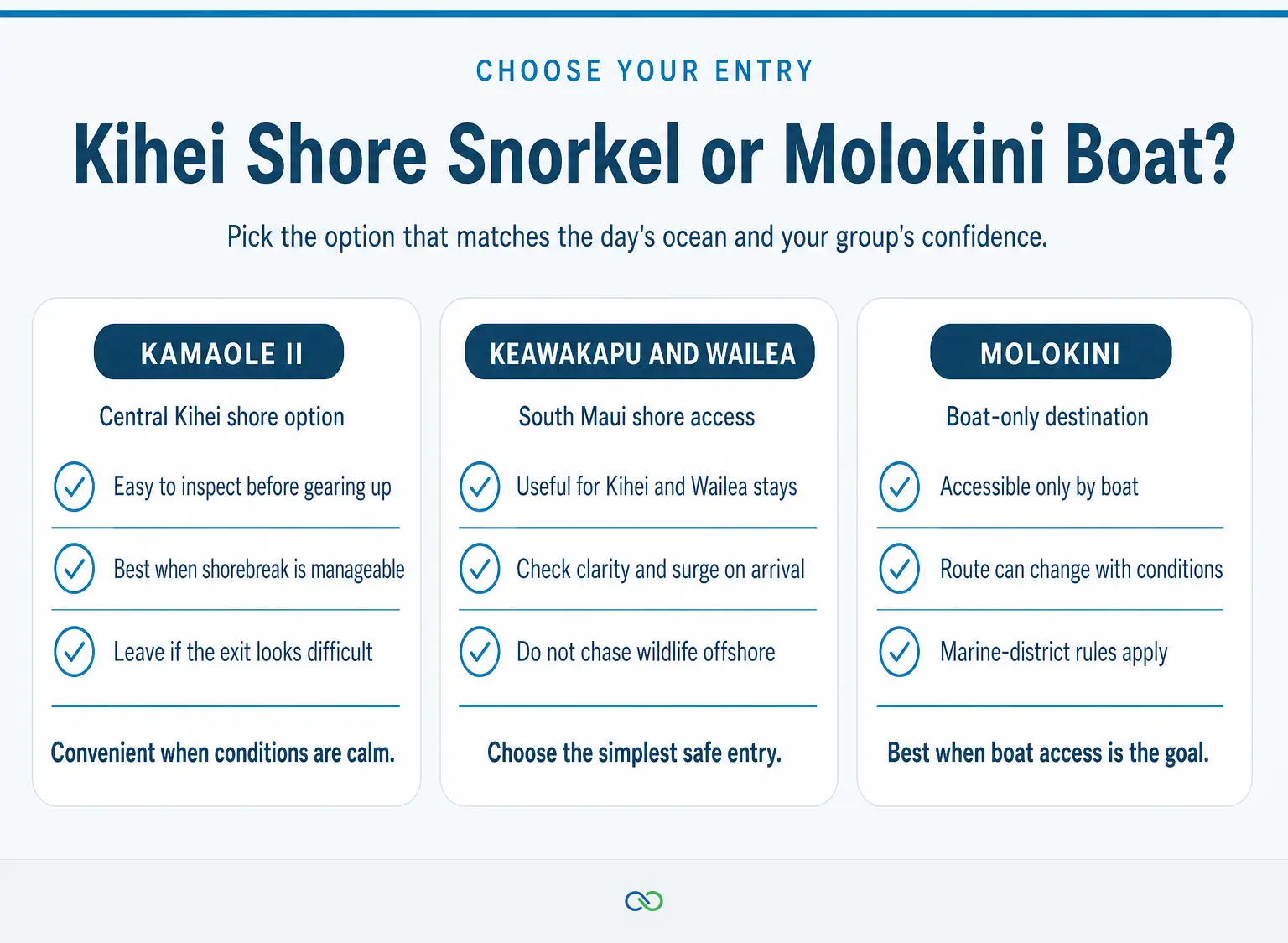
For a shore snorkel, choose the closest South Maui beach with calm, clear water and an easy exit, not the beach that appeared highest in a list. For a boat snorkel, Molokini is the clear destination choice because it is offshore and accessible only by boat. (dar.hawaii.gov)
| Area | Best fit | What to evaluate before entering | Important limitation |
|---|---|---|---|
| Kamaole Beach Parks in Kihei | Visitors who want a nearby beach option and do not want to commit to a boat schedule | Look for manageable shorebreak, clear water, and a comfortable route back to sand | Conditions can change quickly. Kamaole II reopened on August 11, 2026, after storm-related damage, which is a reminder to confirm current access rather than relying on old beach advice. (mauicounty.gov) |
| Keawakapu and nearby Wailea shore access | Visitors staying between Kihei and Wailea who want a beach day with the possibility of snorkeling | Check the water at the time you arrive, especially wind, surge near rocks, and visibility | Maui County identifies Keawakapu Beach Park as a place used for swimming and snorkeling, but that does not make every day suitable for either activity. (mauicounty.gov) |
| Ulua and Mokapu area | Visitors based in Wailea who can be flexible about the exact beach and timing | Prioritize a sandy, comfortable entry and stay close enough to shore to exit easily | Treat this as a condition-dependent shore option, not a promise of calm water or wildlife sightings. |
| Molokini Crater | Visitors who want a boat-only reef destination and do not want to depend on a beach entry | Confirm the operator's route, departure point, weather policy, swim requirements, and what happens if conditions change | Molokini is about 3 miles off Maui's southwest coast. Currents can strengthen, especially with afternoon winds, so conditions still matter on a boat trip. (dar.hawaii.gov) |
Hawaiian green sea turtles, known as honu, are the turtle visitors are most likely to see in Hawaiian waters, but sightings are never guaranteed. If a turtle appears, give it room, do not touch or feed it, and stay at least 10 feet away as recommended by Hawaii's Division of Aquatic Resources. (dar.hawaii.gov)
Is a Kihei shore snorkel or boat trip the better choice?
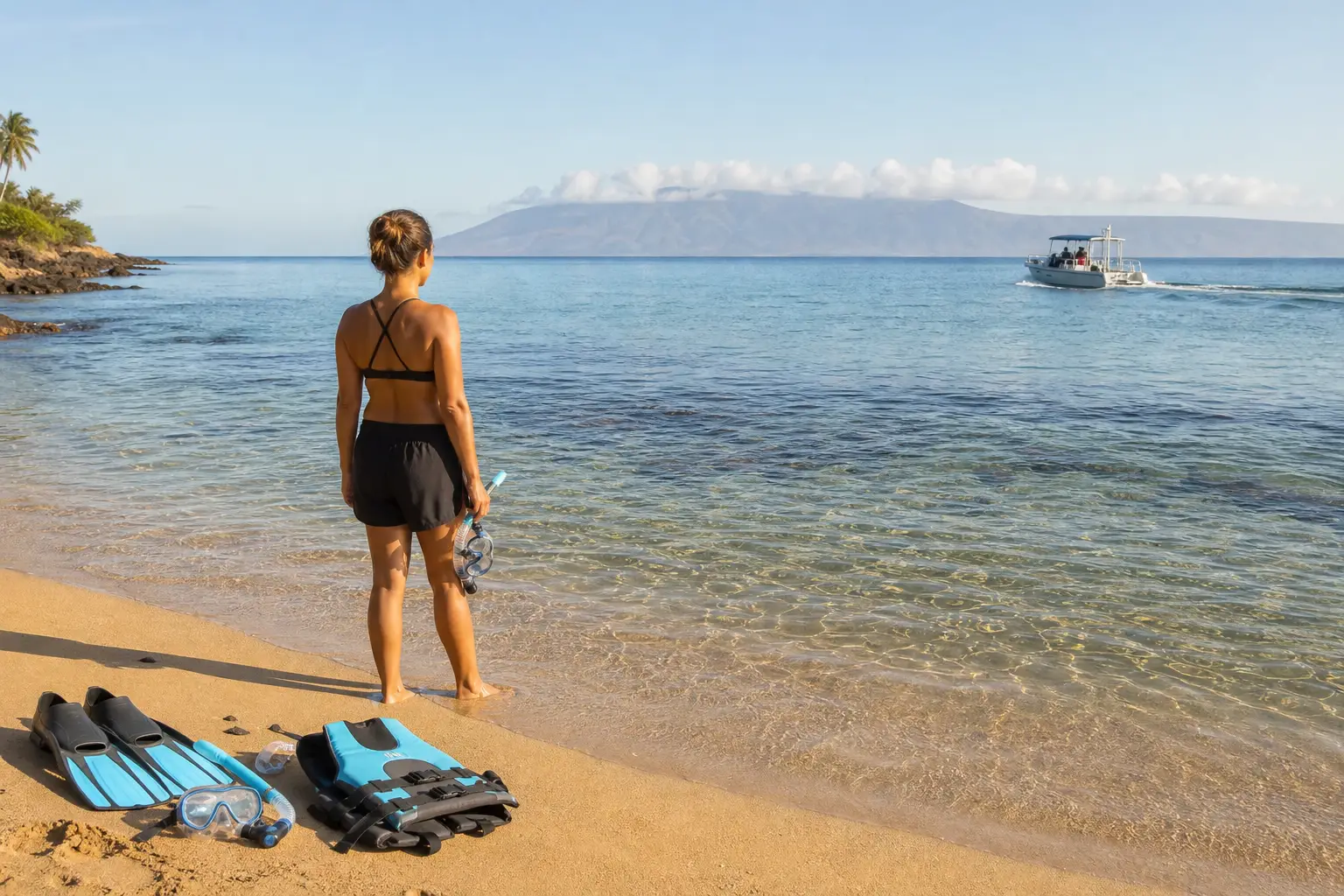
Choose shore snorkeling when the water is calm, the entry and exit look easy, and everyone in the group is confident swimming in the ocean. Choose a boat trip when a boat-only destination such as Molokini is the priority or when guided logistics are more useful than the convenience of walking in from a beach.
A shore session gives you flexibility. You can look at the water, decide it is not right, and change plans without spending the day on a boat. It also works well for visitors who want snorkeling to be one part of a beach day rather than the entire itinerary.
A boat trip is not automatically safer, easier, or better for every swimmer. A responsible operator may alter the route, shorten water time, or cancel when wind, swell, or visibility changes. Ask before booking whether the trip includes flotation, in-water supervision, equipment instruction, and an alternative plan if the intended site is not workable.
Molokini is different from shore sites because it is a state Marine Life Conservation District. Taking or injuring marine life, removing coral or sand, feeding wildlife, and landing on the islet are prohibited. (dar.hawaii.gov) For destination details, see this guide to Molokini snorkeling.
Video: Thinking About a Maui Snorkel Tour? Here’s What to Expect on YouTube.
Visitors based farther south may also want to compare wailea snorkel tours before deciding whether a nearby departure point is more valuable than the freedom of shore snorkeling.
Is it better to snorkel in the morning or afternoon in Hawaii?
Morning is usually the better time to snorkel in Hawaii because ocean conditions and visibility are often better before winds build later in the day. Morning is a useful starting point, not a substitute for checking the actual water before entering. (oceansafety.hawaii.gov)
Plan to arrive early enough to look at the shoreline without rushing. Watch several wave sets. Notice whether the water is clear near the entry, whether people are being pushed sideways by current, and whether you can identify a simple way to return to shore.
The National Weather Service publishes marine forecasts for Maui waters, including the leeward waters and Maalaea Bay zones. Check those forecasts alongside local beach warnings, then use what you see at the shoreline as the final decision point. (weather.gov) For a trip-day checklist, review Maui weather conditions before leaving your lodging.
How do you decide if conditions are safe enough?
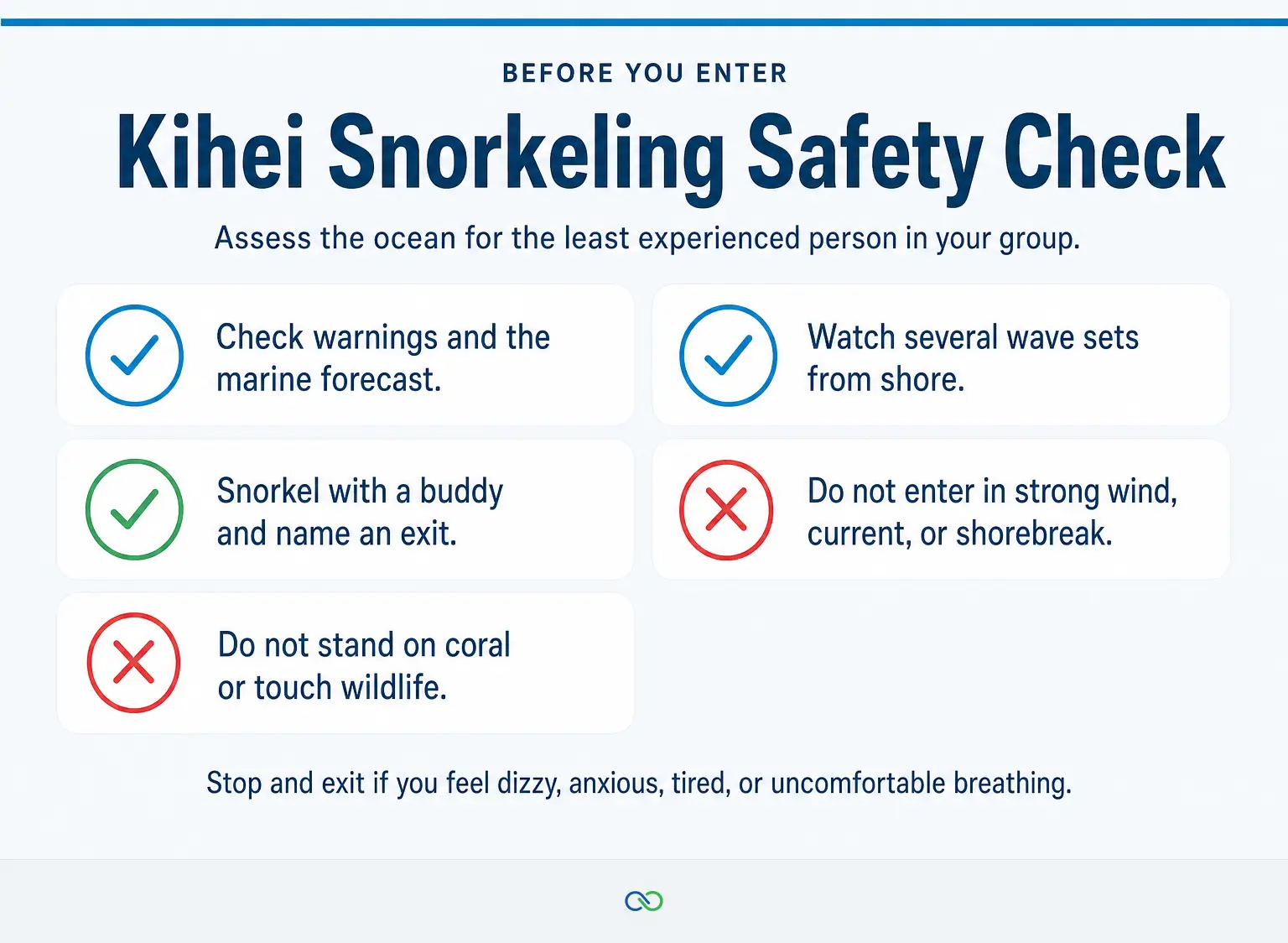
Conditions are safe enough only when the ocean looks manageable for the least experienced person in the group, not the strongest swimmer. If there is heavy shorebreak, strong current, high wind, low visibility, or uncertainty about the exit, skip snorkeling and choose another activity. (oceansafety.hawaii.gov)
Use this short check before a Kihei snorkel:
- Check official information. Read beach warnings and the current marine forecast. Hawaii Ocean Safety directs visitors to current beach-condition resources and recommends swimming at lifeguarded beaches whenever possible. (oceansafety.hawaii.gov)
- Watch the water before gearing up. Do not judge from a single calm minute. Look for recurring sets, surge near rocks, drifting swimmers, and changes in water clarity.
- Choose a buddy and an exit. Snorkel with a partner, keep visual contact, and know where you will leave the water if you tire or conditions worsen. (oceansafety.hawaii.gov)
- Stay off the reef. Never stand on coral or touch marine life. Coral can injure you, and contact harms the reef ecosystem. (oceansafety.hawaii.gov)
- Stop at the first warning sign. Dizziness, headache, anxiety, fatigue, difficult breathing, or a mask problem are reasons to remove the snorkel and exit safely. (oceansafety.hawaii.gov)
Read the full snorkeling and boat safety guidance before a self-directed ocean day.
Is snorkeling difficult for beginners?
Snorkeling is not a good activity for people who cannot swim comfortably in the ocean, even if they wear flotation. Hawaii Ocean Safety says snorkelers should be experienced ocean swimmers who understand the risks of waves, currents, and shallow-water breaks. (oceansafety.hawaii.gov)
A beginner who is comfortable swimming can reduce the learning curve by practicing mask fit, snorkel clearing, and removing the mask before going offshore. A flotation vest or belt may help conserve energy, but it does not replace swimming ability, calm judgment, or a buddy. (oceansafety.hawaii.gov)
For a first ocean snorkel, keep the goal modest: float calmly, breathe slowly, stay close to your partner, and return while you still have plenty of energy. If that does not sound comfortable, choose a supervised introduction or keep the day on shore.
What else do visitors ask about Kihei snorkeling?
These questions come up often because snorkeling plans are personal and conditions change by the hour. The answer should always account for the exact beach, the water that day, and the confidence of the people entering it.
Is it better to snorkel in the morning or afternoon in Hawaii?
Morning is usually the better window for snorkeling in Hawaii because wind activity often increases later in the day, and Hawaii Ocean Safety says morning commonly brings better ocean conditions and visibility. Morning is not a guarantee, so check surf, wind, water clarity, and posted warnings immediately before entering. (oceansafety.hawaii.gov)
Which beach in South Maui is considered the best?
There is no single best South Maui snorkeling beach for every visitor or every day. Kamaole Beach Parks can be convenient for Kihei stays, while Keawakapu and Wailea-area beaches may fit visitors farther south. Pick the location with the clearest, calmest, safest-looking entry when you arrive. (mauicounty.gov)
Is snorkeling difficult for beginners?
Snorkeling can be difficult for beginners because breathing through a snorkel, managing a mask, waves, currents, and fatigue all add demands that a pool does not. Hawaii Ocean Safety recommends that snorkelers be experienced ocean swimmers, practice equipment use first, and consider guided instruction or appropriate flotation. (oceansafety.hawaii.gov)
What should you check or book next?
Start with conditions, not a fixed beach list. If the shore looks calm and everyone is comfortable, choose the simplest nearby entry and keep the session short. If Molokini or a structured on-water experience is the priority, compare Maui snorkeling tours and confirm the operator's route, swim expectations, equipment, and weather policy before booking.