Kihei Fishing: Shore Fishing, Charter Trips, and Local Rules
In short
Kihei fishing works two ways: fish from a lawful public shoreline for a flexible, low-commitment outing, or book a charter for offshore water and crew support. Visitors age 15 or older who are not Hawaiʻi residents need a state marine fishing license, and every angler should check access, protected areas, and weather before casting. Hawaiʻi DAR license information (dlnr.hawaii.gov)
Table of contents
- Can tourists fish in Maui?
- Should you fish from shore in Kihei or book a charter?
- How do you choose a legal shore-fishing spot around Kihei?
- What gear do you need for a simple Kihei shore session?
- How do you check conditions before you go?
- What do visitors ask about Kihei fishing?
- What should you do next?
Kīhei is a useful South Maui base for anglers who want an ocean activity without building a whole vacation day around it. The better choice is not always the most ambitious one. A visitor with two free hours may get more value from a careful shore session, while a group hoping to fish offshore should compare a charter with the broader sport fishing on Maui experience.
Can tourists fish in Maui?
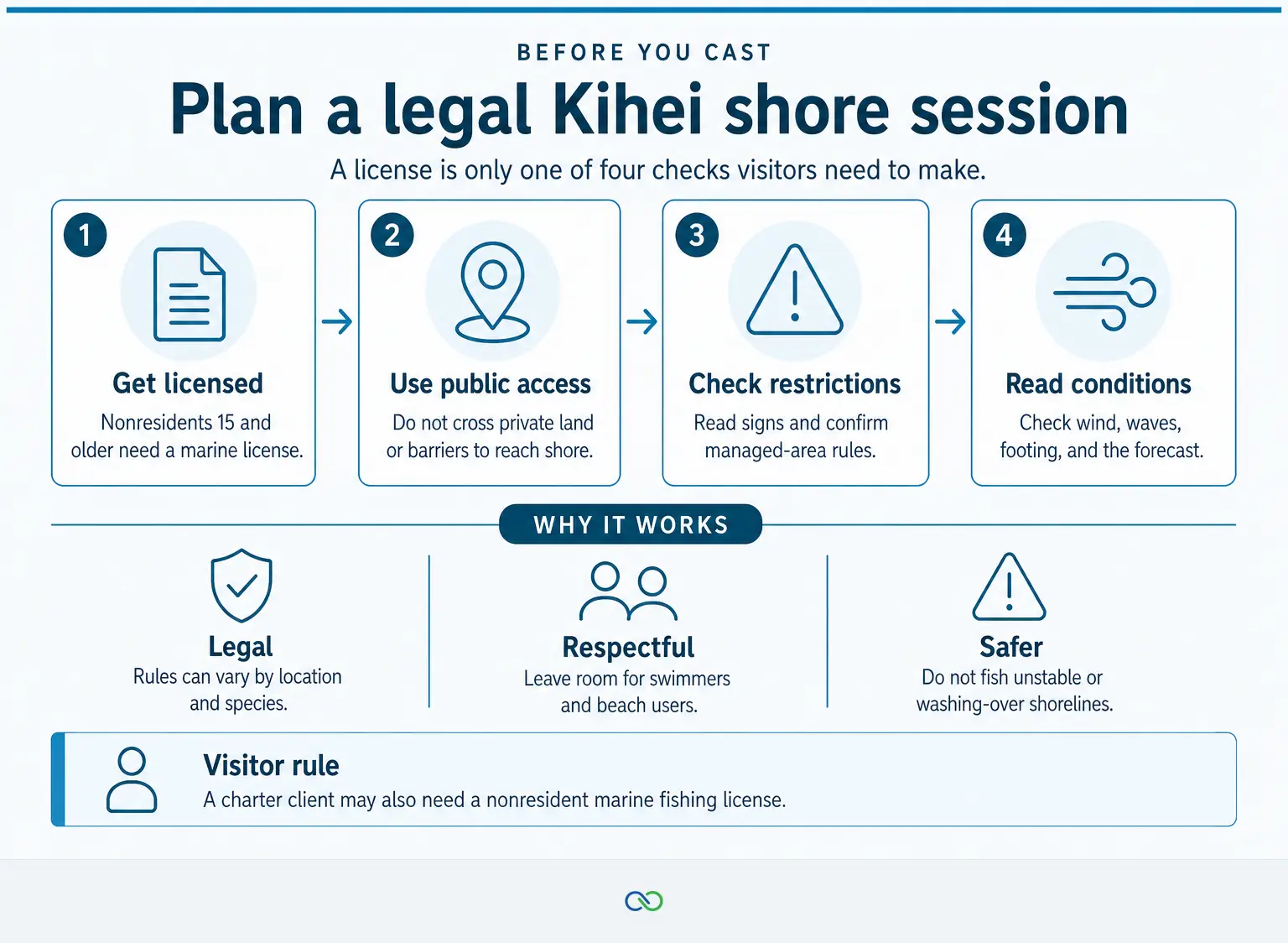
Yes. Visitors can fish Hawaiʻi ocean waters from shore or on a boat, but nonresidents age 15 and older need a Nonresident Recreational Marine Fishing License, including when they are clients on a charter boat. A one-day license is $20, a seven-day license is $40, and an annual license is $70, plus any online processing fees. The Hawaiʻi Division of Aquatic Resources license page lists the current eligibility and fee details. (dlnr.hawaii.gov)
The license is only the first check. Hawaiʻi fishing rules can include species-specific minimum sizes, seasons, bag limits, gear restrictions, and area-specific rules. The state’s online regulations are more useful than a generic packing list because they are the source to consult if a fish is unfamiliar or a shoreline has signs posted.
Buy the visitor license before casting, then treat access and species rules as separate checks rather than assuming the license makes every shoreline or catch legal.
Should you fish from shore in Kihei or book a charter?
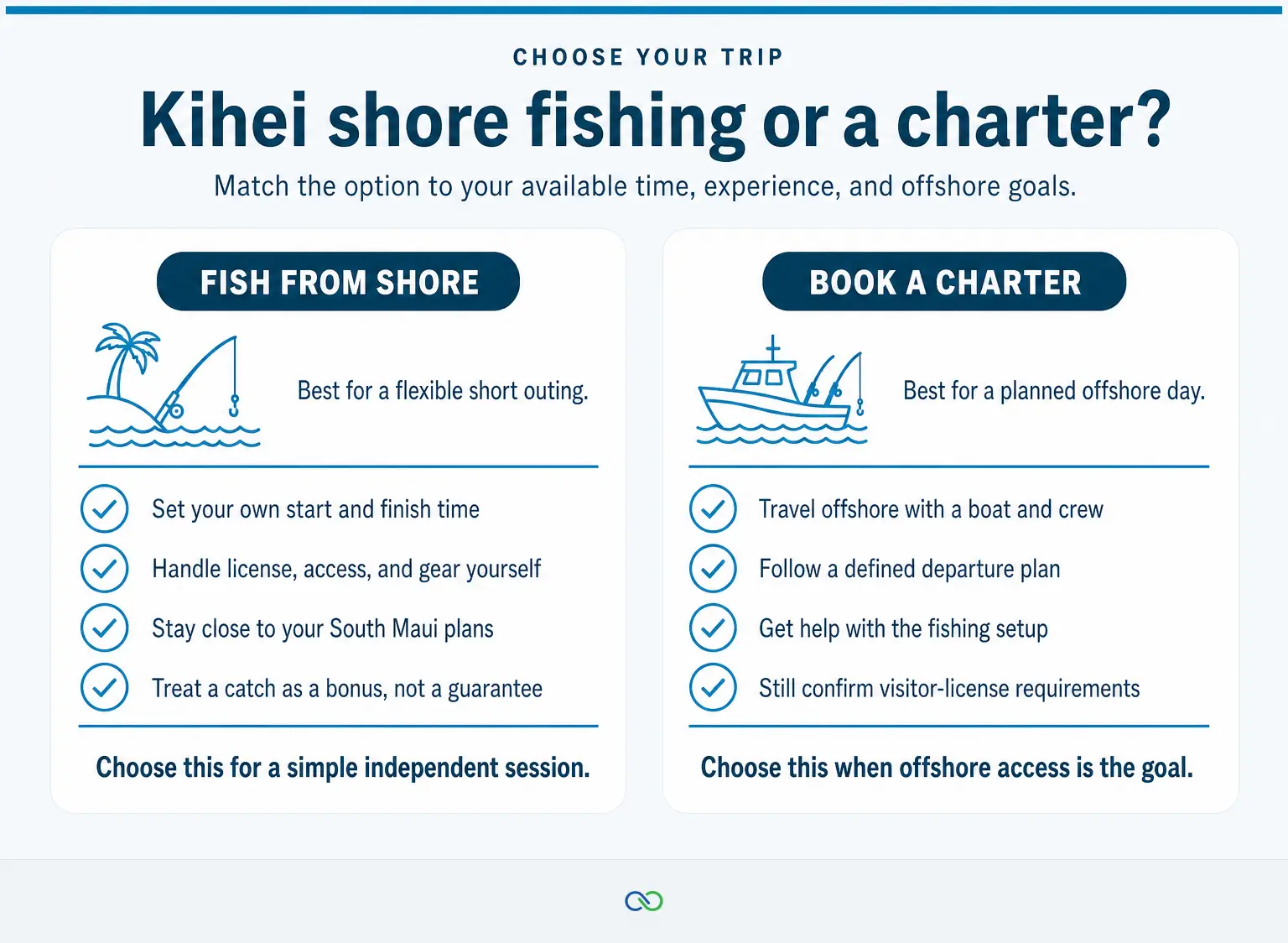
Choose shore fishing when you want a short, self-directed activity and are comfortable handling the license, access, gear, and conditions yourself. Choose a charter when the point of the day is getting offshore with a crew, boat, equipment, and a set departure plan.
Shore fishing makes sense when:
- You have a small window before dinner, a beach day, or another South Maui activity.
- You are happy treating a catch as a possibility, not the measure of the outing.
- You can fish from a publicly accessible area that is not restricted and where conditions are manageable.
- You have simple legal hook-and-line gear and can identify what you catch before deciding whether to keep it.
A charter makes sense when:
- You want to reach offshore water rather than stay close to shore.
- Your group wants help with boat handling, rigging, and the day’s fishing plan.
- You prefer a defined trip rather than spending vacation time finding access and assessing a shoreline.
- You want to compare trip formats before committing. Start with this guide to fishing charters in Maui, Hawaii, then review hawaii deep sea fishing maui for the offshore planning questions that matter most.
A charter does not remove the nonresident license requirement for eligible visitors. The state says the requirement applies whether a nonresident fishes from land or a boat, including charter boats. (dlnr.hawaii.gov)
Pick shore fishing for flexibility and a charter for an offshore experience, not because either option guarantees a particular fish.
How do you choose a legal shore-fishing spot around Kihei?
Start with legal public access, posted restrictions, and safe water conditions instead of searching for a secret “best spot.” The Division of Aquatic Resources says most shoreline areas are open unless prohibited or restricted, but it also warns that access can cross private property and that restrictions may apply in places not fully covered by a general regulations booklet. DAR’s fishing-access FAQ is the best first reference. (dlnr.hawaii.gov)
Use this quick on-site screen:
- Use an obvious public access point. Do not cross private land, climb barriers, or assume a resort frontage creates a public route to the water.
- Read every sign before unloading gear. A no-fishing sign, harbor rule, reserve notice, or posted restriction overrides a blog, social post, or map pin.
- Check the state’s managed-area information. Marine life conservation districts, natural area reserves, harbors, and other managed waters can have rules that differ from the next stretch of coast.
- Give swimmers, snorkelers, and beach users plenty of room. If casting would put other people in the line of travel, choose another time or another place.
- Do not treat Mākena’s ʻĀhihi-Kīnaʻu Natural Area Reserve as a fishing location. DLNR lists taking, removing, injuring, or killing plants and animals there as prohibited. Read the reserve rules before visiting. (dlnr.hawaii.gov)
This approach is less glamorous than a “top 10 spots” list, but it prevents the common visitor mistake of driving to a shoreline that is restricted, inaccessible, crowded, or unsuitable that day.
The right Kihei fishing spot is a lawful, public, uncrowded shoreline with conditions you can assess, not simply the first location that appears in a search result.
What gear do you need for a simple Kihei shore session?
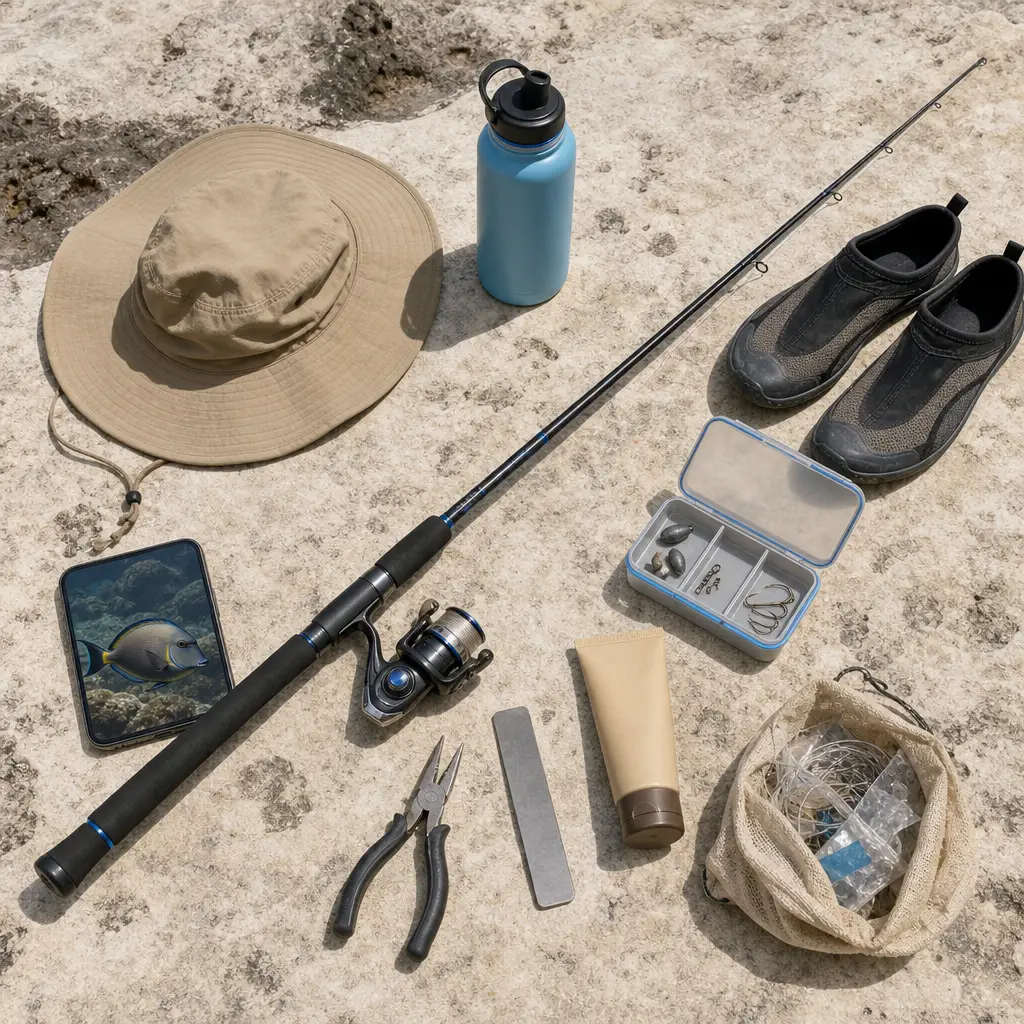
A simple legal hook-and-line setup, sun protection, water, secure footwear, and a way to identify fish are more useful than a large tackle bag. Bring only what you can safely carry away from the shoreline, including all line, hooks, bait packaging, and trash.
For a visitor, a practical kit includes:
- A rod and reel suited to the line and terminal tackle being used.
- A small tackle container, pliers or a line cutter, and a bag for discarded line or packaging.
- Water, reef-safe sun protection, a hat, and sturdy footwear for uneven ground.
- A phone for checking regulations, photographing an unfamiliar fish, and confirming the forecast.
- A measuring device if there is any chance you may keep a regulated fish.
Do not guess at a fish’s legal status. The state’s marine-fish regulations list seasons, minimum sizes, bag limits, and Maui-specific restrictions for some species. (dlnr.hawaii.gov)
Pack for a short, clean, legal session, and release any fish you cannot identify or confirm as legal to possess.
How do you check conditions before you go?
Check conditions on the morning of your fishing session, then look again close to departure if the wind or surf is changing. A fishing article cannot give a reliable Kihei fishing report days or weeks in advance because wind, swell, water clarity, and safe footing can change quickly.
The National Weather Service publishes marine forecasts for Maui zones, including Maʻalaea Bay. Use the NWS Maui marine forecast zones alongside local observation of the actual shoreline; a marine-zone forecast is useful context, not proof that one beach is comfortable or safe for casting. (weather.gov)
Before leaving your lodging, check:
- Wind direction and strength.
- Swell and wave behavior at the shoreline.
- Whether water is washing over the area where you would stand.
- Visibility, lightning risk, and your route back to the car.
- Posted notices and access conditions when you arrive.
For a quick planning reference, review local fishing conditions and the site’s overview of Hawaii boating rules before heading toward the water.
If the shoreline looks unstable or the forecast is worsening, changing the plan is the right fishing decision.
What do visitors ask about Kihei fishing?
Can tourists fish in Maui?
Yes. A visitor can fish Maui’s ocean from shore or on a charter, but a nonresident age 15 or older needs a Hawaiʻi Nonresident Recreational Marine Fishing License. A one-day license costs $20 and a seven-day license costs $40; protected areas and species rules still apply. (dlnr.hawaii.gov)
What is the 80/20 rule in fishing?
The 80/20 rule is a general fishing rule of thumb, not a Hawaiʻi regulation. Anglers use it to mean that a small share of locations, conditions, or presentations may produce much of the action. Treat it as a reason to observe conditions carefully, not as a promise of results.
What is Kihei, Hawaii known for?
Kīhei is known for its South Maui shoreline. The official Hawaiʻi visitor guide describes roughly six miles of beaches along Maui’s southwest coast, making Kīhei a practical base for beach time and ocean planning. That does not mean every shoreline allows fishing, so anglers still need to check access and posted restrictions. (gohawaii.com)
What fish are biting off shore?
No evergreen guide can accurately say what fish are biting offshore on a given day. Offshore fishing changes with weather, water conditions, location, and effort. Ask a charter operator about current target species before booking, and treat any catch estimate as a possibility rather than a promise.
For every fishing question without a clear answer, the current state rules and the day’s conditions matter more than a generic tip.
What should you do next?
Choose the kind of fishing day you actually want, buy the required license if you are a nonresident, and check access and conditions before loading gear. 🎣 If an offshore trip fits your schedule better than shore fishing, contact Maui Boat Rentals about a fishing charter before committing to a shore-fishing setup.